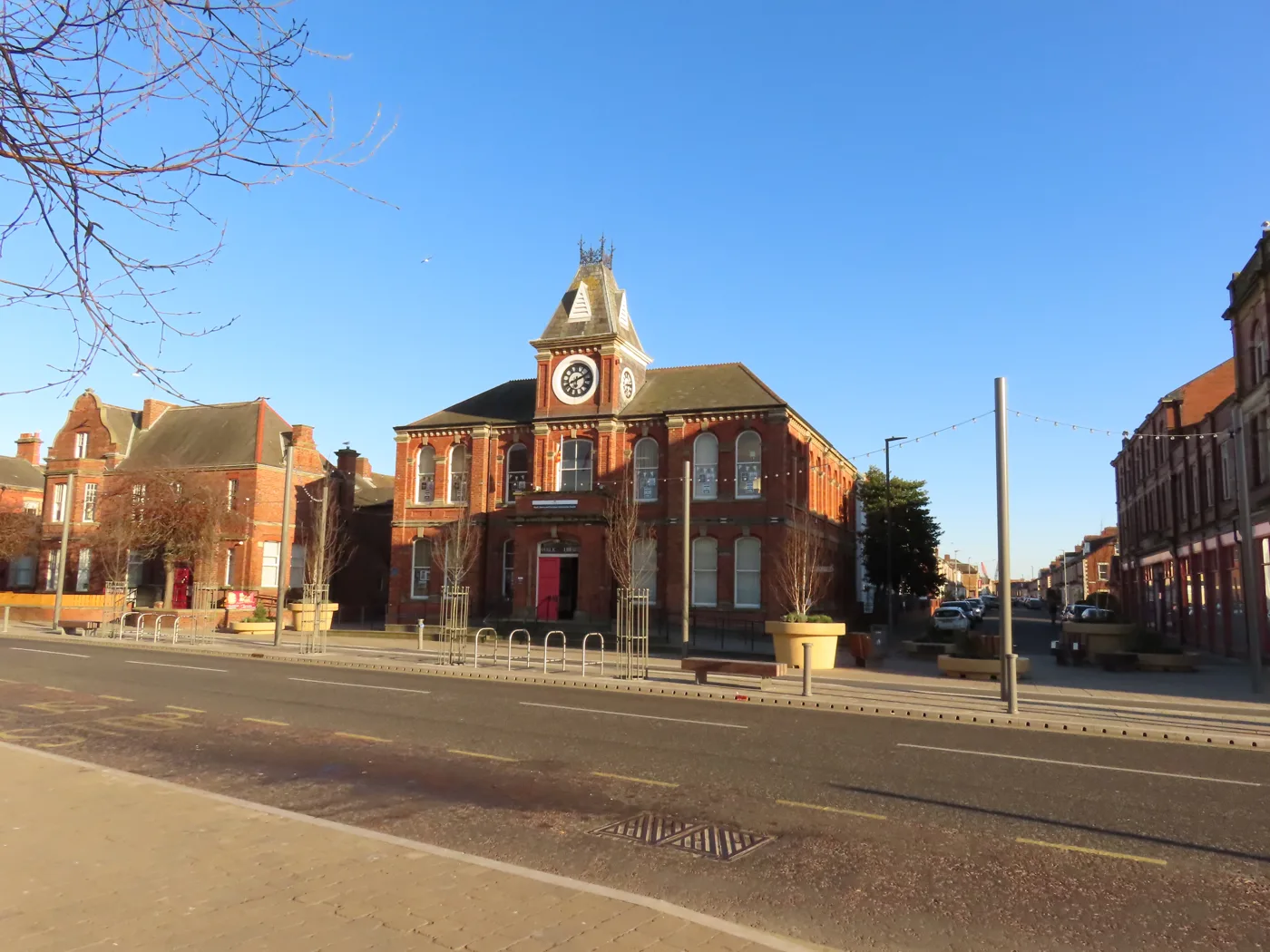

Cabinet approved it on 8 September: 21 staffed libraries on fixed hours, six sites to volunteers or smart shelves, and the mobile library every four weeks, not six.
Northumberland County Council’s Cabinet approved a new Library and Information Service on Tuesday 8 September, starting 4 January 2027. It merges the library service with face-to-face customer services, fixes staffed opening hours by tier across 21 statutory libraries, and replaces the library offer at four sites with smart lockers or shelves.
The consultation drew 5,801 responses, and it changed the plan in at least two ways that residents will notice (Cabinet report, 8 September 2026).
The mobile library will run every four weeks, not six
The consultation proposed cutting the mobile library from a three-weekly to a six-weekly schedule. Respondents said six weeks was too infrequent, and made a specific point: when a stop is missed because of weather or an operational problem, a six-weekly round leaves people without the service for up to 12 weeks.
The report responds by proposing a four-weekly schedule instead. The mobile library will keep serving both the east and the west of the county, including a monthly visit to Holy Island. The council says it can afford this because it has rationalised underused stops.
The service currently visits 214 locations on a three-weekly cycle and serves about 280 active users. The report also says usage analysis has identified a small number of residents who rely solely on the mobile library, and that the council will contact them directly.
Staffed hours are being set by tier
The 21 statutory libraries are organised into four tiers in an area-based hub and cluster model. Each tier gets a fixed number of staffed hours a week, so you can read your own library’s staffing off this table.
| Tier | Staffed hours a week | Libraries |
|---|---|---|
| Hub | 46, including 5 on Saturday | Berwick, Ashington, Blyth, Morpeth, Hexham |
| Primary Plus | 43, including 3 on Saturday | Alnwick, Cramlington, Prudhoe |
| Primary | 30, including 3 on Saturday | Rothbury, Wooler, Amble, Bedlington, Ponteland, Haltwhistle |
| Secondary | 12 | Newbiggin, Lynemouth, Widdrington, Wylam, Allendale, Bellingham, Corbridge |
Hub and Primary Plus libraries are staffed six days a week. Primary libraries are staffed five days a week.
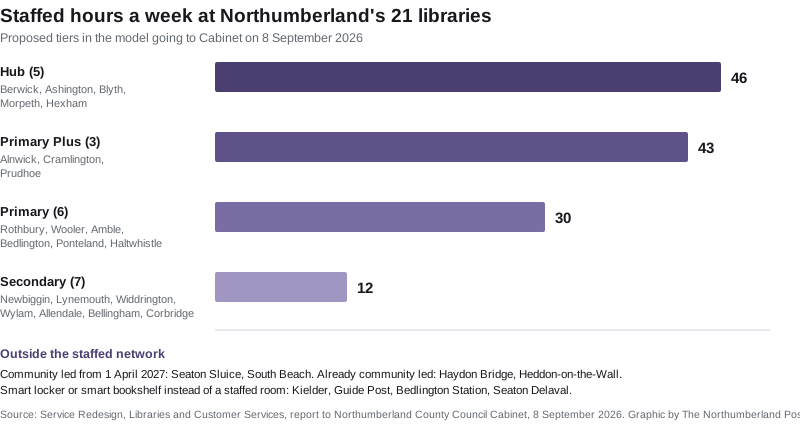
The report is candid that this means “a minor reduction in staffed opening hours” overall. It argues total availability still rises, through community-led libraries, longer access at co-located sites such as leisure centres, and technology that lets people in when staff are not there.
The consultation moved two of these numbers. Hubs were confirmed at 46 hours. The Primary Plus tier is new, and it was set at 43 hours rather than the 45 originally proposed, in order to fund increases in staffed hours elsewhere in the service. The report singles out Prudhoe, saying its hours were revised after feedback about the library’s role in the town.
Every one of the 21 libraries also becomes a place to do council business in person. At present residents have to travel to one of six Customer Information Centres. In the consultation, 60% of respondents supported extending access to council services through libraries.
Daily opening patterns are not settled. The report says weekly hours are fixed within the model but the actual days and times will be worked out during implementation, using staff input, consultation responses and usage data.
Six sites change hands or change format
Two libraries are proposed to become Community Led Libraries from 1 April 2027:
- Seaton Sluice. Talks have been held with Seaton Sluice Community Centre trustees, who would run it using their existing volunteer network. A costed three-year support package has been drawn up.
- South Beach. The existing volunteers want to carry on. The council is also in talks with a charitable incorporated organisation that specialises in developing community groups, which could operate the library in partnership with those volunteers. The neighbouring residents’ association and nursery say they support the model but cannot run it themselves.
Four more sites lose their current library provision in favour of technology. Here the report is inconsistent about what to call them. Recommendation (f) asks Cabinet to approve a smart locker or smart bookshelf replacing library provision at Kielder Village, Astley Park Pavilion, East Bedlington Community Centre and Guidepost. The body of the report describes smart bookshelves at Guide Post, Bedlington Station and Seaton Delaval, and a smart locker at Kielder. One list names venues, the other names communities.
The Kielder locker will be outdoors, giving 24-hour access. Readers order online, the weekly county-wide drop-off run delivers to the locker, and returns go back in the same unit. It is funded by Arts Council England. The smart bookshelves will be indoors and council branded.
The council already runs Community Led Libraries at Haydon Bridge and Heddon-on-the-Wall. Between them those two open for 23 hours a week, issue around 2,000 items a year and have 140 registered members. Both are proposed for an enhanced support package.
New community-led libraries would get a tapered three-year package covering costs such as rent, insurance, utilities and legal obligations, plus an initial stock collection and a dedicated outreach officer. Once a library is “mature enough”, responsibility for the building would transfer to the community.
The money
The new model is forecast to save £344,000 a year: £200,000 from the staffing model and £144,000 from back-office efficiencies and savings already made through earlier voluntary redundancies. Because the service starts in January 2027, the full-year saving lands in 2027-28.
The report states there will be no compulsory redundancies. Some staff may take voluntary redundancy. The staff consultation ran from 8 June to 7 July 2026 and covered 119 employees across the two services.
Separately, the library service has been awarded £491,000 from Arts Council England’s Libraries Improvement Fund Round 4, to be spent between April 2026 and March 2029 on open access technology, self-service kiosks, smart bookshelves, smart lockers and a project manager. A further £15,000 has been added to the 2026-27 book fund for digital licences.
Open Access is the bit worth watching
The report floats “Open Access Libraries”, where members use their library card to get into a library building outside staffed hours. Adults, and children with an adult, would be able to borrow and return using self-service, use the computers and Wi-Fi, and use the space for study or group meetings.
It is described as something the council is “assessing the potential to introduce” rather than part of what Cabinet approved. But it is the mechanism the report leans on when it argues that fewer staffed hours does not mean less access, so it is the thing to hold the council to.
What it means for you
- Nothing changes before January 2027. The new service goes live on 4 January 2027, and the community-led transfers at Seaton Sluice and South Beach are proposed for 1 April 2027.
- If you use the mobile library: the schedule moves to four-weekly, not the six-weekly plan that was consulted on. Holy Island keeps a monthly visit.
- If you use Kielder, Guidepost, Bedlington Station or Seaton Delaval: your library provision becomes a smart locker or a smart bookshelf, not a staffed room. The approved decision names the four venues as Kielder Village, Astley Park Pavilion, East Bedlington Community Centre and Guidepost.
- If you want to know your own library’s hours: the tier hours are now fixed, but the daily pattern is set during implementation and is not published yet.
- If you want to read the decision: Cabinet took it on 8 September. The printed decisions confirm the 21 statutory libraries, the transfers, the four automated venues and £491,000 from Arts Council England for digital infrastructure.
The council has a statutory duty under sections 7 and 8 of the Public Libraries and Museums Act 1964 to provide a comprehensive and efficient library service. The report notes the Department for Culture, Media and Sport has been kept informed throughout, and that around 180 libraries closed in England between 2014 and 2023 on the department’s own estimates.
The same Cabinet meeting approved a £1.191 million grant for Haltwhistle Swimming and Leisure Centre, and agreed the council’s response to the bus franchising consultation.
Sources
- Service Redesign: Libraries and Customer Services, report to Northumberland County Council Cabinet, 8 September 2026, for the 4 January 2027 start, the 21 statutory libraries and four tiers, the staffed hours per tier and which library sits in which tier, the Primary Plus revision from 45 to 43 hours and the Prudhoe feedback, the six Customer Information Centres and the 60% consultation figure, the Seaton Sluice and South Beach community-led proposals, the smart locker and smart bookshelf sites, the mobile library schedule change and the 12-week point, the 214 stops and 280 active users, the 5,801 consultation responses, the 119 staff consulted, the £344,000 savings, the no compulsory redundancies statement, the £491,000 Arts Council England award, the £15,000 book fund addition, the Open Access description, the 1964 Act duty and the DCMS closure estimate.
- Agenda for Cabinet, Tuesday 8 September 2026, for the meeting time, venue and the full agenda including the appendices referred to in the report.
Have your say